Arclumina: AI applications for everyday B2B work

Many companies can see what artificial intelligence (AI) could do for them, but they do not yet know where to start. This is where Arclumina comes in. The new company, in which Arcmedia holds a stake, helps B2B companies use AI where it improves everyday work. B2B means that these companies sell mainly to other businesses. Arclumina is currently building its team and looking for its first projects.
Arclumina advises, develops bespoke software and can also look after the finished application. An AI application is a program that uses artificial intelligence to take over or support a specific task, for example handling customer enquiries or searching internal knowledge. You do not need a finished project idea to get started.
Arclumina is familiar with this need from conversations with Arcmedia’s clients. It also draws on research by co-founder Joel Sidler and on AI applications he implemented in the real estate sector before the company was founded. The conclusion: a good idea on its own is often not enough. It must also be clear how the application fits with existing systems and how employees will work with it.
Which tasks Arclumina is suited to
Arclumina is aimed at B2B companies where important tasks are fairly complex. Several systems or departments are often involved, and the information needed is spread across different places. Two conditions matter. The task must offer scope for a significant improvement. And the management team must back the project.
First, clarify what is needed
One important starting point is consulting or AI advisory sessions. These are conversations in which questions are clarified, ideas are tested and next steps are planned, with manageable effort. This also works when a project is already under way. In workshops, teams can also build up their own knowledge of AI.
Then develop and connect
Once the need is clear, Arclumina develops bespoke software and connects it to the programs the company already uses. Existing AI applications can be developed further in the same way. After launch, Arclumina can take over operation and look after the application.
Not every enquiry leads to an AI project. If a standard solution already covers the task, Arclumina recommends it. Sometimes a better search function, clearer processes or a simple automation is enough. If there is no recognisable benefit or the risks are too high, Arclumina advises against the project.
“We do not want to use AI for the sake of AI,” writes co-founder Joel Sidler.
Example: when experience retires
Joel Sidler chose an example to show what working together could look like. It is deliberately invented and does not come from a real project.
In a medium-sized company, experienced employees are approaching retirement. Some of their knowledge is in documents and emails. But much of it exists only in their heads. Knowledge about special situations and exceptions is precisely what is often missing from the documentation. Anyone with a question searches in several places or asks these colleagues directly.
The first step would be conversations. Together with the experienced employees, Arclumina would look at which questions and situations matter in their work and record their knowledge during the handover, along with existing work instructions, project documentation and case examples. The company has to set aside time for this while these people are still there.
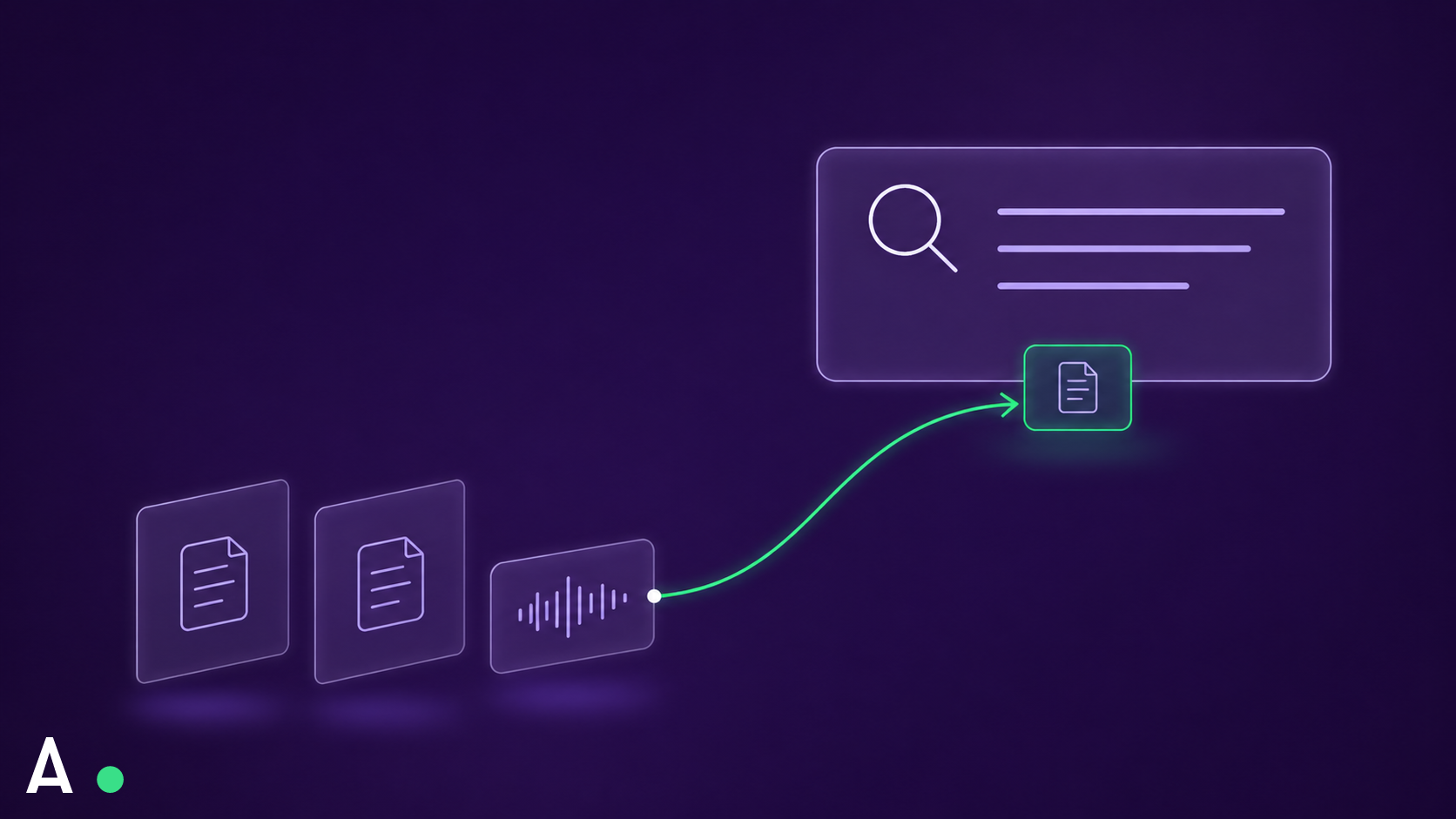
AI could then organise the approved recordings and documents and prepare clear summaries from them, while employees would still review the content against their own expertise. Joel Sidler names one limit explicitly: “What was never recorded, the AI cannot reliably know either.”
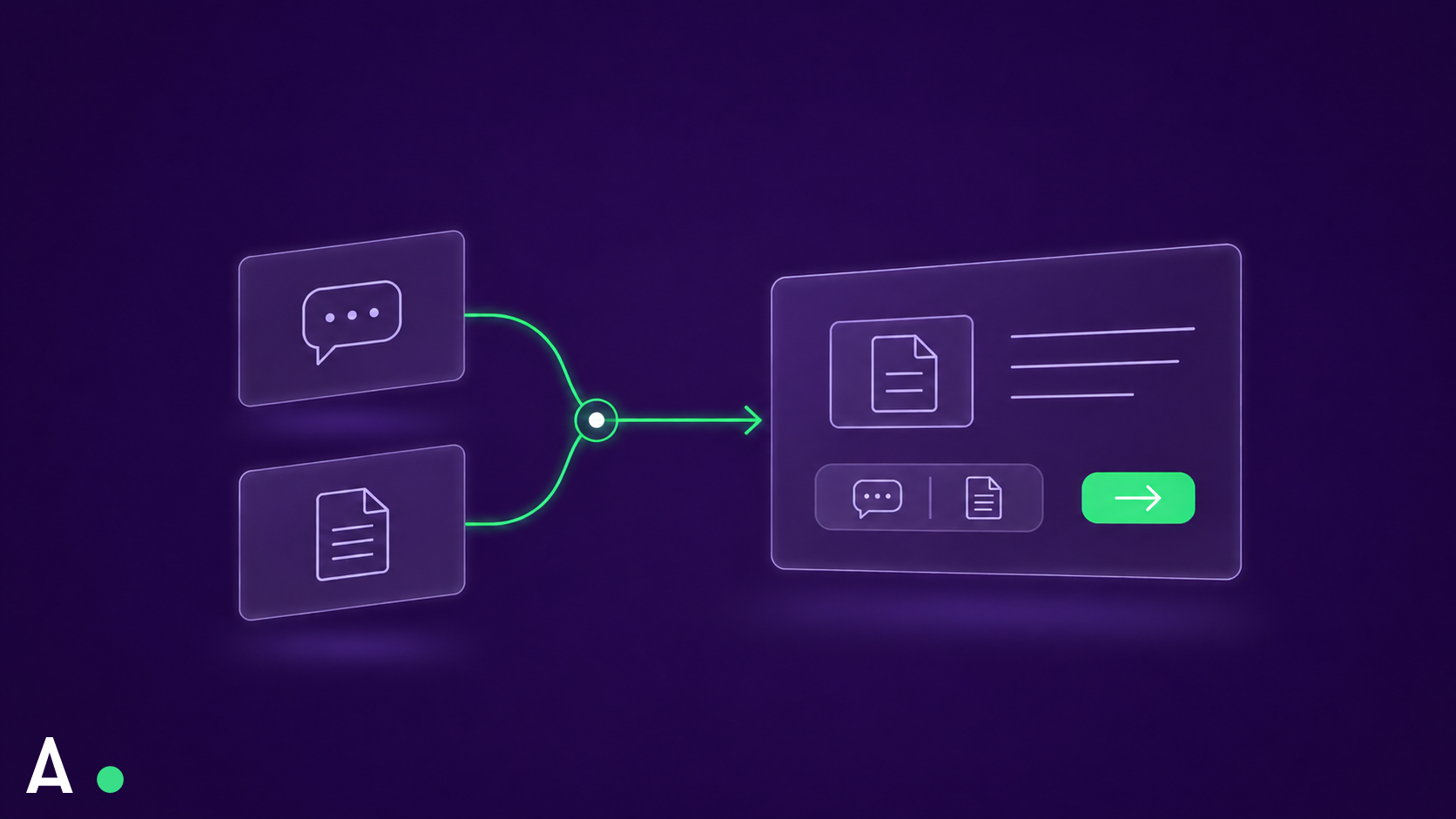
The end result could be an internal assistant, in other words a program that employees can ask questions. It would answer on the basis of the checked content and show which source each answer is based on. Ideally, it would be available where employees already work.
Beforehand, it would need to be checked together which documents are reliable and who may access them. And people would be needed to keep the content up to date.
The hope would be that employees spend less time searching and that new colleagues settle in more easily. The knowledge would also remain available after retirement. Whether that works can only be shown by a practical test, meaning a time-limited trial in real day-to-day work. The time needed to record and maintain the knowledge also has to be factored in.
What an initial test needs to clarify
“How much it actually delivers only becomes clear in the practical test,” writes Joel Sidler. Such a test deliberately starts small. In the retirement example, the test would begin with a manageable area of knowledge and typical questions. Beforehand, the company and Arclumina record how long searching takes today and how often follow-up questions are needed. They then agree what should improve and how long the test will run.
Early on, Arclumina builds a prototype, meaning a first, simple version of the application. It allows the idea to be judged against your own work, even when people in the team have very different levels of AI knowledge. Arclumina does not have to start from scratch: reusable technical foundations are adapted to the existing systems.
The evaluation is based on four questions:
- Are the answers correct in substance?
- Can their sources be traced?
- Do employees use the application, and does it help them get their work done?
- How much maintenance does it need?
Each role also brings its own perspective. The management team wants to see that the investment pays off, for example through lower costs or better service, and IT needs to be able to run the application well in the existing environment.
Who in the company takes part
The company needs backing from management and a contact person who knows the process. They are joined by employees who give feedback and check the results, and, depending on the project, by the people responsible for IT and data protection. Arclumina can take on analysis, planning, implementation and testing. How much time the company needs to set aside depends on the project.
Arclumina also discusses reservations about AI with the team. Joel Sidler: “It is important to me to involve employees early and to take their fears seriously.” In workshops and by trying things out, they see for themselves where AI helps and where its limits lie. Their feedback goes into the development. That way, the solution fits their work.
What it costs and what happens next
Once the scope has been agreed, Arclumina prepares a specific quotation. The effort depends, for example, on the functions required, the state of the data and the systems that need to be connected. Flat-rate prices would not be very helpful here, because requirements vary greatly from project to project. And after the test? Then the people involved decide again: expand, adjust or stop. The yardstick is whether the results are right, whether the application is used and whether the benefit justifies the effort.
What happens to your data
Before data flows into an application, the company and Arclumina clarify four points:
- Which data will be used?
- Who may access it?
- Where will it be processed and stored?
- When will it be deleted?
How strict the rules are depends on how sensitive the data is.
If an application uses an AI service from an external provider, the small print matters. The contract terms and settings must show whether inputs are stored and whether the provider may use them for model training, meaning to improve its AI model further.
There is an alternative: for suitable tasks, the application can run on your own devices or servers. This is becoming possible because of language models, the technology that lets AI understand and write text. Joel Sidler observes that smaller language models are also becoming more capable. If such models run inside your own company, confidential information can be processed within your own infrastructure. Whether a model of this kind does the job reliably enough and whether running it is worthwhile has to be checked case by case.
AI can still give wrong or incomplete answers, even when its sources are good. That is why Arclumina tests before launch and carries out checks during operation, depending on the risk. When there is doubt, a person checks the result, and decisions with greater consequences are always approved by a person.
Joel Sidler notes: “We cannot and do not want to promise freedom from errors.”
How Arclumina and Arcmedia work together
Arclumina and Arcmedia are independent companies. They work closely together in what is known as a parent and subsidiary structure. This means that Arcmedia, as the parent company, holds a stake in Arclumina, and Joel Sidler also holds a personal stake.
Why a separate company? “AI is developing very quickly,” Joel Sidler explains. This calls for new knowledge and new ways of working that could not easily be built within Arcmedia’s established structures. Arclumina can therefore focus entirely on AI.
Arclumina generally runs its AI projects itself, from consulting through to support. If additional expertise is needed, for example in development or marketing, Arcmedia is brought in. In turn, Arclumina can take on the AI part of Arcmedia projects, complementing Arcmedia’s services in AI and data. For clients, it stays simple: one dedicated contact person coordinates the collaboration. The two companies agree tasks and responsibilities internally.
Joel Sidler: from hospitality to AI
Joel Sidler started with an apprenticeship as a hotel specialist and worked in hospitality for several years. He then earned a bachelor’s degree in real estate management. During his studies, he discovered his passion for digitalisation and became a co-organiser of Startup Nights. An aha moment came with his first research paper on AI in early 2024.
Before the company was founded, he implemented AI applications in the real estate sector. A mutual acquaintance introduced him to Davide Cortese and Stefano Palladini of Arcmedia, and their conversations about the needs of Arcmedia and its clients led to the idea for Arclumina. Hospitality gave him a focus on clients. His studies gave him an understanding of digitalisation. Organising events gave him a network and experience in getting things done.
Becoming an entrepreneur had long been his goal. At Arclumina, he is responsible for management and for building up the company. Davide Cortese and Stefano Palladini support him strategically and sit on the board of directors. The name also links the two companies: “Arc” refers to Arcmedia, and “Lumina” stands for light. The idea is to provide orientation in the use of AI.
Where Arclumina stands today
At present, the three co-founders are involved in day-to-day work themselves. Depending on the task, specialists from Arcmedia or external people complement the team, while Arclumina builds up its own technical team. Over the next twelve months, Joel Sidler wants to build applications with the first clients that people actually use in their everyday work. For him, success means that the agreed goals are achieved and that clients want to take the next steps together as well. Whether this approach holds up will show in the first client projects.
What needs to be settled after launch
Joel Sidler describes a common misconception like this: “The idea is often: we introduce AI, and then the matter is settled.” But an application has to be operated, maintained and developed further. In the retirement example, new experience would be added, outdated information would need correcting, and processes and systems within the company also change. So it is worth deciding from the start who takes care of this.
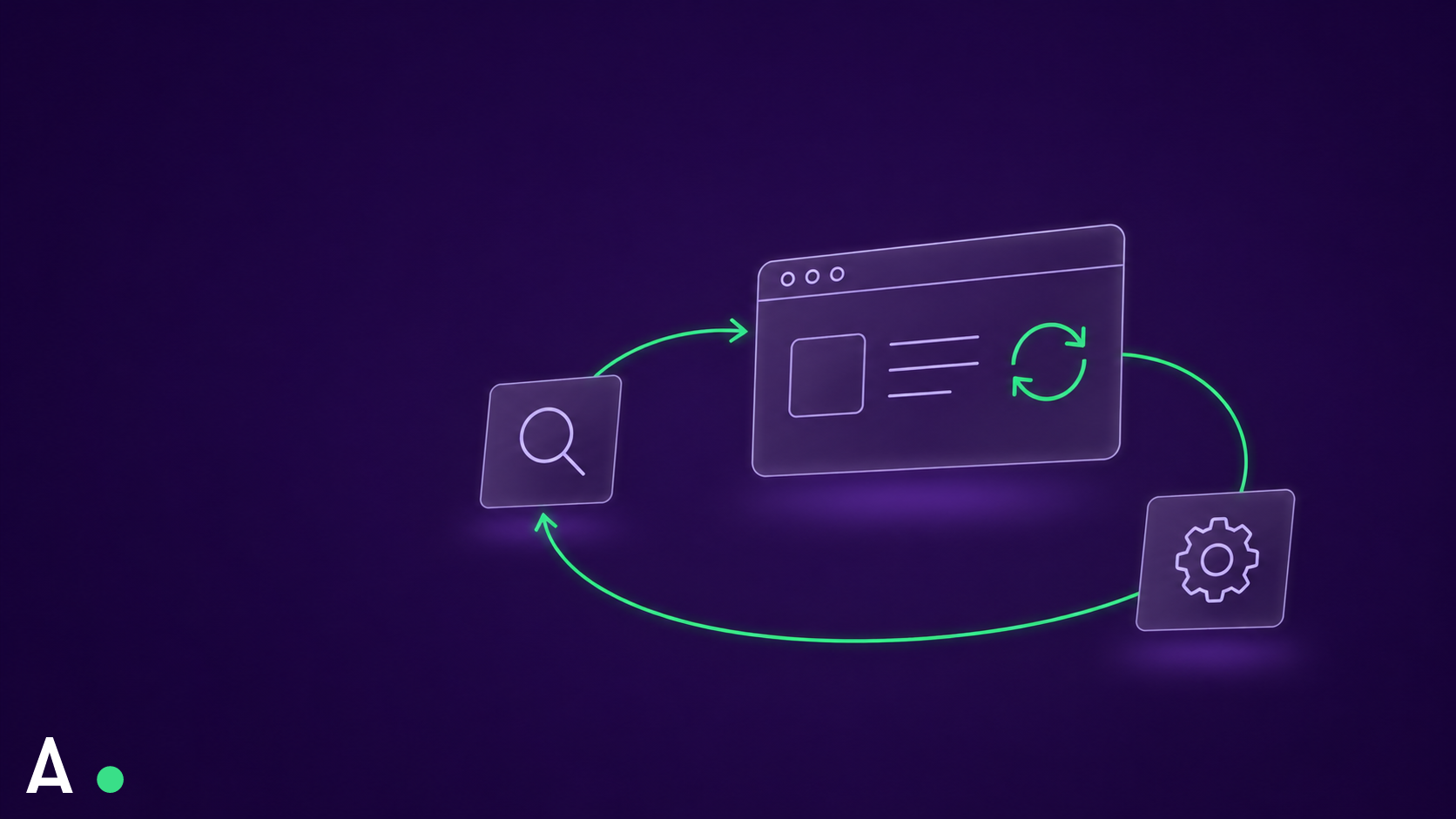
Which tasks Arclumina takes on and which remain with the company is set out in a service agreement, known as a service level agreement or SLA. The ongoing costs depend on how much support is needed, where the application runs and how intensively it is used. They are therefore agreed individually for each project.
How to start the first conversation
Joel Sidler recommends talking to employees first. Where is time being lost in everyday work? Where is knowledge missing? Which processes are unnecessarily complicated? Initial ideas often emerge from this alone, and nothing more is needed at the start: “For a first conversation, questions and challenges from your own company are enough.”
For its first projects, Arclumina is looking for companies with an important task that involves several processes, data sources or systems. The retirement example would be one such project. The management team should be behind it, and employees should be able to contribute their knowledge and feedback. A small first step is possible. Joel Sidler can be reached via the Arclumina website (in German), by email or on LinkedIn.
Conclusion: start small and let the results decide
Start with a task whose effort you can observe today and whose results your experts can check. Arclumina helps you narrow the task down and try it out in an initial test. The results then decide what happens next. For anyone still hesitating, Joel Sidler has this advice: “You do not need to bring a finished use case with you yet.” If required, Arclumina supports the project all the way into day-to-day operation.
Would you like to tackle a task in your company with AI?
Arcmedia has been supporting companies with digital commerce projects since 1995, from analysis through implementation to ongoing operations. Our experts are happy to advise you on your project.
Always up to date with the latest trends and tips: subscribe to our newsletter.
Frequently asked questions about working with Arclumina
Do we already need a specific AI idea?
No. Questions and challenges from your company are enough. You can also ask for support while a project is already under way.
Can Arclumina develop an existing AI application further?
Yes. Arclumina can develop existing applications further and integrate them better into your processes and systems. The starting point is a joint look at where things stand today.
When is bespoke development worthwhile?
When the task justifies the effort and a standard solution, a better search function or a simple automation is not enough.
How do we know whether a practical test has worked?
With baseline values recorded before the start, such as how long searching takes today. After that, what counts is accuracy, traceable sources, actual use and the maintenance effort. On this basis, the project is expanded, adjusted or stopped.
What will a project cost, and how much time will our team need?
That depends on the scope, which Arclumina narrows down with you. A specific quotation is based on it. Your team mainly needs one person who knows the process and employees who can give feedback. Ongoing costs are agreed individually.
Can confidential data stay within our own company?
For suitable tasks, this may be possible by running the application on your own devices or servers. Arclumina checks in advance whether the model works reliably enough and cost-effectively there.
Who checks the AI’s answers?
People who know the task. “When there is uncertainty, a person should check the results,” notes Joel Sidler. Decisions with greater consequences are always approved by a person.
Who looks after the application after launch?
Arclumina can take this on. How tasks are divided is set out in the service agreement. Who keeps the content up to date is clarified during planning.
Sources
- Joel Sidler, co-founder of Arclumina: written answers to a questionnaire of 47 questions from Arcmedia, November 2026, in German. All quotations in this article are translated from these answers.
- Arclumina, website (in German): arclumina.ai